
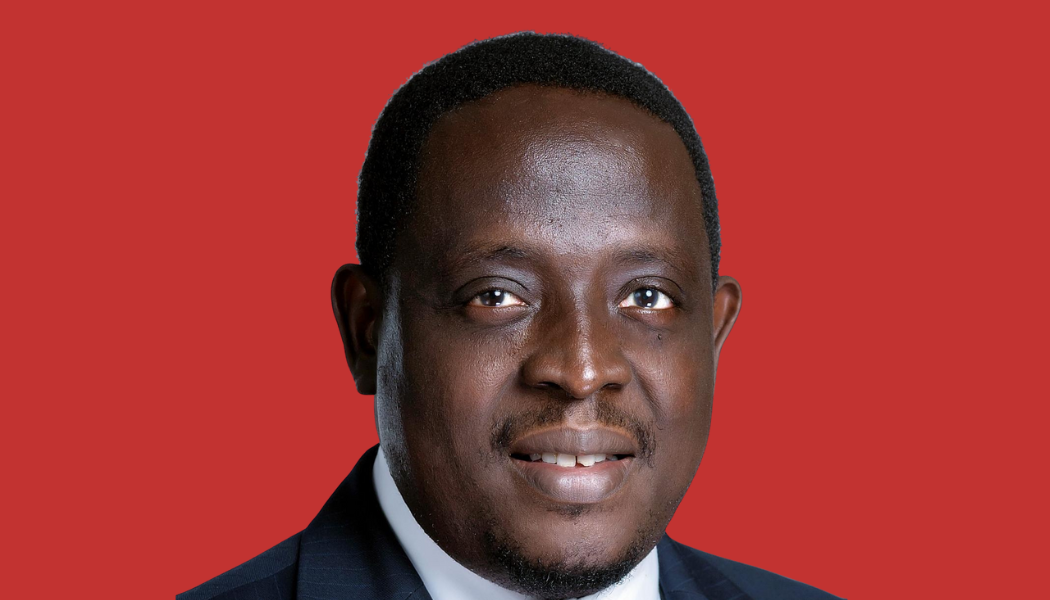

When the West Africa Tech Excellence Forum (WATEF) closed the books on its 2023 award cycle at the WATEF International Conference, one name stood out for what it represented as much as for what it achieved: Dr Olusegun Bamidele Oso, one of the winners of the WATEF Impact Leadership Award 2023 and among the top three recognised from a field of fifteen nominees.
The citation behind his recognition is straightforward. He is a physician who moved into finance and investment, and then used that dual perspective to influence how money, risk, and strategy flow into healthcare, mobility, and technology-enabled services across West Africa. The impact is not theoretical. It is reflected in better financed hospitals, stronger pipelines of health infrastructure projects, and a new generation of clean mobility and insurance platforms governed with more discipline.
This is not a story about a single transaction or an isolated success. It is a long arc of work that shows what happens when clinical experience meets capital markets, and when investment decisions are anchored in the realities of everyday life in the region.
From Consulting Room to Capital Allocation
The starting point is clinical. After training at the University of Ibadan, one of Nigeria’s most demanding medical schools, Dr Oso began his professional journey in frontline medicine. He worked in public health environments that many in the region will recognise: crowded waiting rooms, limited equipment, overstretched staff, and funding gaps that no amount of personal commitment from doctors or nurses can close.
That experience created two kinds of insight. First, an intimate understanding of how health systems actually function day to day, from the pressure on beds to the strain on budgets. Second, a clear sense that many of the constraints were not strictly clinical. They were financial and structural. Facilities did not just need more doctors. They needed better capital, more thoughtful planning, and long term investment in infrastructure and technology.
Rather than treat that as a background frustration, he made it his focus. He chose to leave the predictable path of a medical career and entered banking, corporate finance, and investment. It was a deliberate move toward the question that had been bothering him since those early ward rounds: who decides where the money goes, and on what terms.
Learning the Language of Capital
The transition into finance was not cosmetic. Across leading institutions in advisory, investment banking, and private equity, he built technical competence and deal experience in sectors that anchor any modern economy: healthcare, financial services, real estate, and infrastructure.
Colleagues and clients came to see him as someone who could translate. On one side were promoters, hospital owners, emerging technology founders, and operators who understood their businesses but often struggled to frame them in a way that institutional investors would back. On the other side were investment committees and credit teams that needed clear risk-reward stories and credible execution plans.
Dr Oso operated in the space between both worlds. He became known for converting complex business needs into investment narratives that serious capital could understand and support. That skill set is particularly relevant in West Africa, where many promising businesses fail to scale not because the ideas are weak, but because the bridge between operational reality and structured capital is missing.
Within healthcare-focused private equity, this translation role became even more strategic. He contributed to fund strategies, pipeline development, deal negotiations, and post-investment value creation, always with an eye on both commercial viability and system relevance.
Healthcare Private Equity and the Discipline of Structure
Health systems do not transform on goodwill alone. They require long term capital, clear structures, and governance that can survive leadership changes and policy swings. Working within healthcare-focused private equity, Dr Oso helped to put that discipline to work.
His contributions covered the full cycle of investment:
- Designing fund strategies that matched investor appetite with the realities of healthcare in emerging markets
- Building pipelines of hospitals, diagnostic platforms, and ancillary services that could absorb capital and grow responsibly
- Negotiating deals with promoters, where valuation, control, and growth plans had to be carefully aligned
- Supporting portfolio companies on governance, expansion, and eventual exits
The thread running through this work is structure. Not just financial structuring, but institutional structuring: clearer boards, defined reporting lines, better risk frameworks, and more rigorous performance tracking. These are the unglamorous elements of healthcare investment that rarely make headlines, yet they determine whether patients eventually see better services and whether investors remain committed.
In this environment, his clinical background was not an ornament. It allowed him to interrogate assumptions about patient volumes, care pathways, equipment utilisation, and quality assurance in ways that conventional finance professionals often cannot. It also kept the focus on outcomes, not just returns.
The Nigeria Healthcare Development Fund: A Platform for Systemic Change
The shift from individual transactions to systemic influence becomes more visible in his role as co-founder of the Nigeria Healthcare Development Fund. The fund emerged in response to a reality that became impossible to ignore during successive global health emergencies: Nigeria’s healthcare infrastructure and financing gaps were too wide to be left to fragmented efforts.
The Nigeria Healthcare Development Fund was created to channel purpose driven capital into credible healthcare businesses. The aim was not charity. It was to build a pipeline of viable clinics, hospitals, diagnostic centres, and adjacent services that could expand, modernise, and sustain themselves.
Through this platform, Dr Oso has focused on linking institutional and local investors with healthcare operators who understand their markets but need more structured capital. The work involves detailed assessments, risk-sharing structures, and long conversations about governance and accountability. It is patient, technical, and often quiet.
Yet the outcomes are tangible. Clinics are better equipped. Hospitals can plan expansions with more confidence. Diagnostic platforms can invest in technology that moves them beyond basic services. The fund effectively sits at the intersection of health need and financial capacity, and his role in shaping its direction has been central.
For WATEF, which looks closely at how leaders design and scale solutions that outlast their tenure, this kind of platform thinking carries weight. It moves the conversation from isolated projects to system-level finance.
Steering Finance in the Mobility and Clean Technology Space
His influence is not confined to healthcare. As chief financial officer of a leading mobility and electric vehicle company in West Africa, Dr Oso sits at another major fault line in the region’s development story: how people and goods move, and what that movement costs in economic, social, and environmental terms.
The company operates at a point where transport infrastructure, energy transition, and digital platforms meet. In that context, the role of the CFO is not limited to accounting oversight. It involves financial strategy, capital formation, and risk management across multiple markets, each with its own regulatory and currency challenges.
Under his watch, the finance function has been strengthened, investor confidence has deepened, and the organisation’s shift toward cleaner, more efficient transport solutions has gained clearer financial structure. He has had to make the case for electric and technology enabled mobility in regions where capital can be conservative and where infrastructure gaps make new models risky.
By shaping how the company structures its capital and manages risks, he influences the pace at which cleaner transport options can scale. This is directly aligned with WATEF’s interest in sustainability focused innovation. It also reflects a consistent pattern in his work: targeting sectors that shape everyday life, and then aligning capital to support long term resilience.
Boardroom Influence and Institutional Governance
Impact at scale often shows up in governance footprints, not just in job titles. Dr Oso holds board-level roles across life insurance, technology, leasing, and healthcare related organisations. In these positions, he contributes to audit, finance, risk, and governance committees.
The significance of this portfolio lies in its diversity and its convergence. Life insurance sits at the junction of long term savings, risk pooling, and household resilience. Technology companies shape the tools and platforms that underlie modern commerce and service delivery. Leasing businesses support asset access, from equipment to vehicles. Healthcare organisations, of course, remain close to his clinical roots.
In each of these settings, his contribution is to push for clarity in strategy, discipline in execution, and honesty in risk recognition. Board work is rarely glamorous. It involves reviewing dense reports, challenging assumptions, and insisting on controls that sometimes slow down short term ambitions. Yet it is in these rooms that institutions either build staying power or set themselves up for avoidable crises.
For a region where governance failures have often undermined good ideas, this steady, technical work is a quiet form of impact leadership.
Intellectual Contribution and Ecosystem Building
Beyond transactions and boardrooms, Dr Oso maintains an active intellectual footprint. He serves as a section editor, editorial board member, and peer reviewer for international journals in management, finance, economics, and medical science. This puts him at the crossroads of research, policy debates, and practice.
The value of this engagement is twofold. First, it ties him into global conversations about how markets, institutions, and health systems are evolving. Second, it helps to ensure that African perspectives and data are reflected in those conversations, and not just treated as afterthoughts.
He also invests time and attention in innovation challenges and social impact competitions. In these settings, he sits on panels that evaluate early stage ideas, often from younger founders and practitioners. His role is to test the logic of their models, probe their assumptions, and help them think through what it takes to move from concept to viable operation.
This ecosystem work matters. It extends his influence beyond established companies into the pipeline of future enterprises that will shape healthcare, finance, mobility, and technology across West Africa.
A Unifying Narrative: Capital as a Public Tool
Taken together, these strands of his career form a coherent narrative. Dr Olusegun Bamidele Oso is a physician turned finance and investment leader who has built a career at the crossroads of healthcare, capital markets, and corporate leadership in Africa and beyond. Over almost three decades, he has moved from treating patients to shaping how capital flows into hospitals, infrastructure, and technology enabled businesses, especially in West Africa.
The consistent pattern is not sector hopping. It is a deliberate focus on sectors that define everyday life: where people go for care, how they move, how they are insured, and how technology underpins their interactions. In each of these spaces, he positions capital as a tool for long term resilience, not short term speculation.
He uses his medical foundation to keep human outcomes in view, and his financial expertise to design structures that investors can trust. That combination allows him to widen his circle of impact beyond any one clinic or company. He shapes investment decisions, supports responsible growth in healthcare and mobility, and strengthens institutions that serve millions across the region.
His work demonstrates how capital, when guided with purpose, can improve resilience, access, and long term outcomes for communities.
Why the WATEF Impact Leadership Award 2023 Matters in This Case
For WATEF, the Impact Leadership Award is not an honorary label. It is reserved for individuals whose work sits at the intersection of innovation, capital, and tangible social outcomes across West Africa’s technology and impact ecosystem.
In that context, the rationale for his recognition is explicit.
Dr Oso deserves the WATEF Impact Leadership Award 2023 because he has consistently used his blend of medical training and financial expertise to drive real progress in sectors that shape everyday life across West Africa. Through his leadership in healthcare investment, his role in developing the Nigeria Healthcare Development Fund, and his work strengthening mobility and technology driven businesses, he has helped channel capital into services that improve access, quality, and long term resilience.
His board contributions in insurance, technology, and healthcare also show his commitment to building institutions that protect people, support innovation, and create lasting social value. His impact is measurable, sustained, and rooted in a clear vision for a stronger, people centered ecosystem, which makes him a fitting recipient of this award.
This is not simply about celebrating an individual career. It is about signalling what WATEF believes leadership should look like in a region facing demographic pressure, urban growth, climate risk, and persistent infrastructure gaps.
Signal to Founders, Investors, and Policymakers
Awards often risk becoming routine. A ceremony, a plaque, a series of social media posts, then a quiet return to business as usual. The WATEF Impact Leadership Award 2023, in recognising a profile like Dr Oso’s, invites a different reading.
For founders in healthtech, mobility, fintech, and adjacent sectors, his journey underscores a few practical points:
- Deep domain knowledge still matters. His clinical foundation remains a reference point, even after years in finance.
- Capital fluency is non negotiable. To grow, innovators must learn to speak the language of investors without losing sight of their mission.
- Governance is not a late-stage concern. The structures that support resilience should be designed early, not patched on after a crisis.
For investors, his work illustrates how impact and commercial discipline can sit side by side. Healthcare facilities and clean mobility platforms can, with the right structures, offer both acceptable returns and meaningful social outcomes. It is not a simple equation, but it is not an impossible one.
For policymakers and regulators, the Nigeria Healthcare Development Fund and his governance footprint offer practical clues. When credible platforms exist to channel capital into health and mobility, regulation can be calibrated to encourage participation while safeguarding standards.
Looking Ahead: What His Win Represents for the Ecosystem
As the WATEF International Conference 2023 concludes and attention turns to the next cycle of innovation and investment, the significance of this particular award sits in what it points toward.
Leaders who can blend sector knowledge with financial discipline will be increasingly important as West Africa navigates its next decade. Healthcare systems will need more capacity and better governance. Mobility will have to become cleaner and more efficient. Insurance and technology platforms will play growing roles in how risk is shared and how services are delivered.
Dr Olusegun Bamidele Oso’s recognition as one of the winners of the WATEF Impact Leadership Award 2023 sends a clear message across the region’s innovation and impact community. The ecosystem does not just need capital. It needs capital that is intentional, structured, and informed by real sector understanding. It needs leaders who can sit comfortably in boardrooms, clinics, data rooms, and innovation hubs, and ask the same question in each setting: what will this decision mean for people, years from now.
For WATEF, this award is both a salute and a signal. It acknowledges the sustained work of a professional who has treated capital as a public tool, and it invites the next wave of founders, investors, and executives to build on that template.
As preparations quietly begin for future editions of the WATEF Awards and accompanying conferences, one thing is clear. The benchmark for impact leadership in West Africa is being set, not by rhetoric, but by careers like this one, where clinical insight, financial strategy, and institutional governance align to move systems in the right direction.
